October 31, 2019
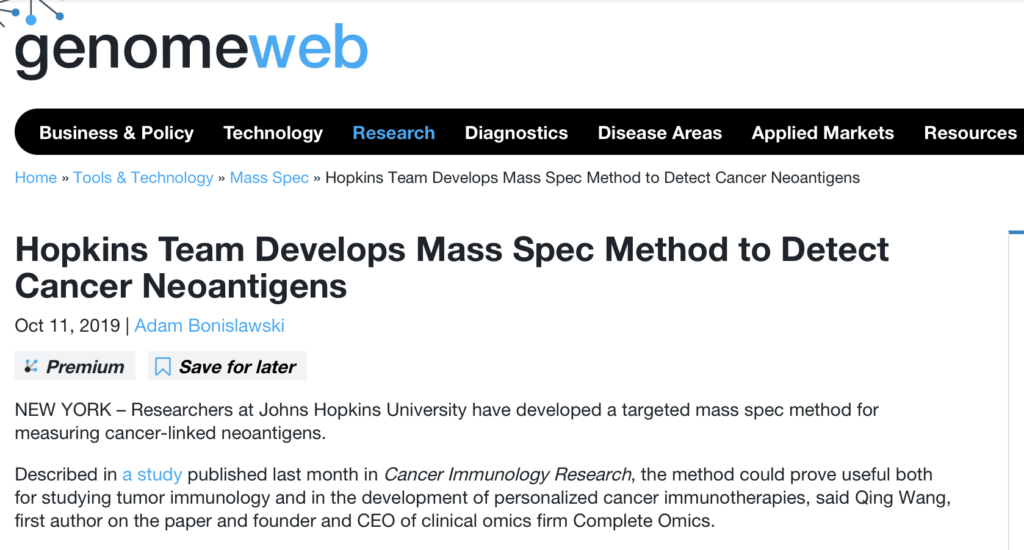
Complete Omics announces that its founder and CEO, Dr. Qing Wang, led and designed a pioneering mass spectrometry method for the direct detection of cancer neoantigens at the peptide level while serving at Johns Hopkins University.
The study, published in Cancer Immunology Research, and featured by GenomeWeb represents a critical technical advance in tumor immunology and personalized cancer immunotherapy. Dr. Wang conceived, architected, and drove the development of the method during his time in the laboratory of renowned cancer geneticist Bert Vogelstein.
A Founder-Led Scientific Breakthrough
At the time of the research, Dr. Wang was a faculty investigator in Dr. Vogelstein’s laboratory, where he focused on solving one of cancer immunotherapy’s most fundamental challenges:
How do we confirm that cancer mutations actually produce HLA-presented mutant peptides in tumor cells?
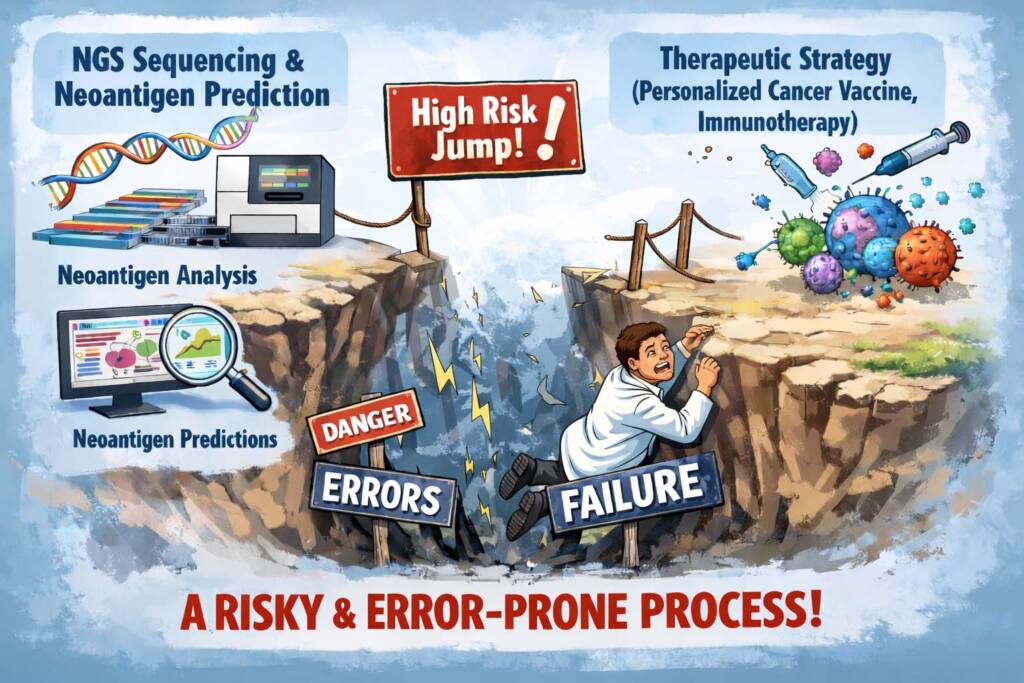
While next-generation sequencing can identify thousands of mutations, the mere presence of a mutation does not guarantee:
- Expression at the protein level
- Proteasomal processing into peptides
- Presentation by HLA molecules
- Immunogenic visibility to T cells
Dr. Wang recognized that genomic prediction alone was insufficient and designed a mass spectrometry strategy to directly validate neoantigens at the peptide level.
“We realized that designing immunotherapies based solely on predicted mutations was not enough,” said Dr. Qing Wang. “The key question is whether those mutant peptides are truly present and presented. That required a new level of analytical sensitivity.”
What This Breakthrough Means
The ability to directly detect mutation-associated neoantigen peptides at the protein level represents a structural shift in precision oncology. For years, cancer immunotherapy has relied heavily on genomic prediction. Next-generation sequencing can identify thousands of tumor mutations, but prediction alone cannot confirm whether a mutation:
- Produces a stable protein
- Is processed into a peptide
- Is presented by HLA molecules
- Exists at biologically meaningful abundance
Dr. Qing Wang’s founder-led innovation addressed this critical validation gap.
By enabling ultra-sensitive, targeted mass spectrometry detection of neoantigen peptides, this method established a new principle:
Immunotherapy design should be grounded in direct molecular evidence — not prediction alone.
The implications are profound:
1. Precision in Vaccine Development
Personalized cancer vaccines can now prioritize mutations that are truly presented at the peptide level, reducing wasted effort on non-expressed targets.
2. Rational TCR and Cell Therapy Targeting
T-cell receptor engineering strategies can focus on confirmed, HLA-presented neoantigens with validated abundance profiles.
3. Immunotherapy Stratification
Understanding which hotspot mutations produce presented peptides may inform checkpoint inhibitor responsiveness and combination therapy strategies.
4. Bridging Genomics and Proteomics
This work represents one of the earliest systematic attempts to close the gap between DNA-level mutation discovery and protein-level immune visibility.
In essence, this breakthrough reframed neoantigen research from theoretical prediction to experimentally validated reality — establishing a new gold standard for translational tumor immunology.
What’s Next: Scaling Neoantigen Validation Through Complete Omics
While the initial work demonstrated proof-of-concept feasibility, the long-term vision extends far beyond individual experiments.
Complete Omics is advancing this foundational innovation toward scalable clinical and translational applications through:
- Improving sensitivity while reducing cost
- Increasing throughput
- Automating workflows
- Integrating multi-omics context (genomic + proteomic validation)
The goal is to transition from research-scale validation to clinically actionable immunopeptidomics.
Strategic Vision
What began as a founder-led scientific breakthrough at Johns Hopkins is now evolving into a scalable immuno-oncology platform. Complete Omics is not merely building assays — it is building the molecular infrastructure required for next-generation immunotherapy. And this 2019 breakthrough marks the starting point.